Industrial Animation for Offshore Projects: Professional 3D Videos by Fidar
Drawings, CAD files and engineering reports are not always enough. Clients, investors, contractors and project teams need to see how equipment works, how an installation is carried out and how each stage of an offshore operation connects.
This is where industrial animation becomes highly valuable. A professional 3D industrial video can demonstrate equipment installation, lifting operations, mooring systems, floating structures, offshore wind projects and subsea activities in a clear and engaging way.
Fidar Animation specializes in creating industrial and offshore animation that transforms engineering information into accurate, understandable and visually engaging content. These videos can be used for project presentations, marketing, tenders, training, investor meetings and technical communication.
Fidar provides customized solutions for offshore projects and states on its website that suitable projects can be delivered in under four weeks, depending on the scope and complexity of the work.
What Is Industrial Animation?
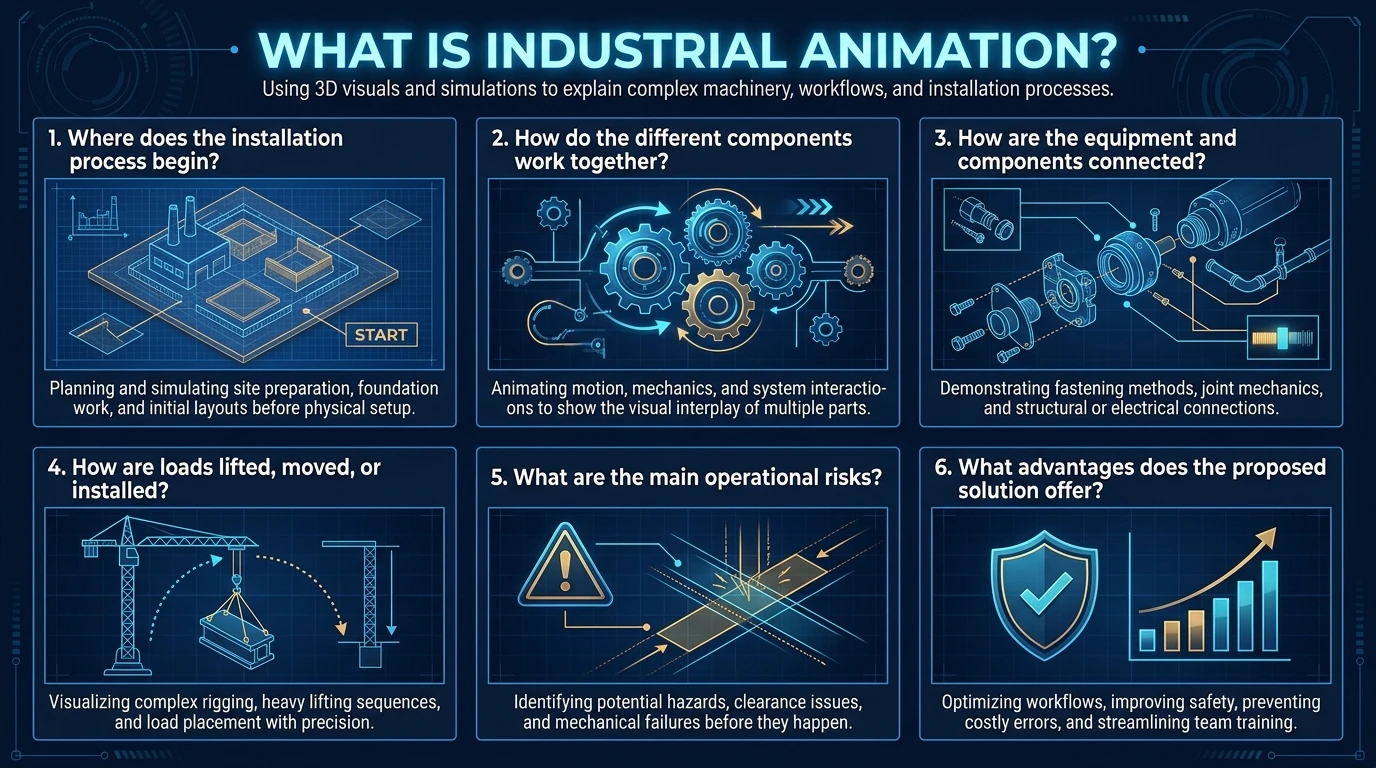
Industrial animation is a type of 3D technical video used to present products, equipment, systems and industrial processes.
The purpose of industrial animation is not simply to create an attractive video. The animation must also communicate technical information accurately. The audience should be able to understand:
In offshore projects, industrial animation becomes even more important because many operations are difficult to demonstrate in real life. Offshore environments involve water, vessels, heavy equipment, difficult weather conditions and complex installation procedures.
A 3D animation can recreate these conditions and show the entire process step by step from different camera angles.
Why Do Offshore Projects Need Industrial Animation?
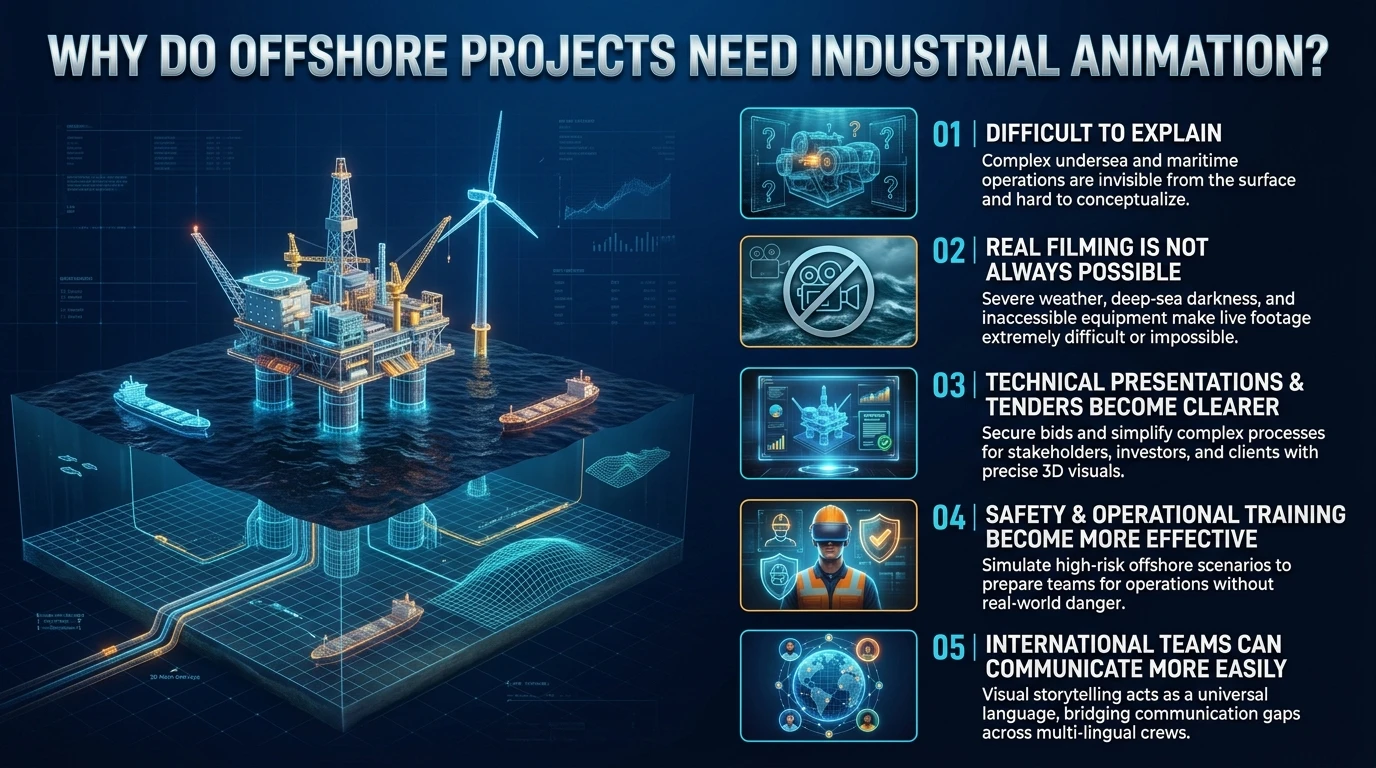
1. Offshore Projects Are Difficult to Explain
An offshore project may involve engineers, project managers, procurement teams, investors and company executives. These audiences do not always have the same level of technical knowledge.
A technical drawing may be clear to an engineer but confusing to an investor or business decision-maker. An industrial animation can simplify the same concept by visually showing how the project works.
2. Real Filming Is Not Always Possible
Many offshore operations cannot be filmed easily. Sometimes the project has not yet been constructed. In other cases, the operation takes place underwater, far offshore or in dangerous conditions.
With 3D animation, the project can be visualized before construction or installation begins. This allows the audience to see the process without the need for real equipment or an actual offshore worksite.
3. Technical Presentations and Tenders Become Clearer
Companies working on offshore tenders need to explain their proposed method clearly. A professional industrial animation can help them present the execution method, demonstrate the sequence of operations, explain company capabilities, and give decision-makers a clearer view of the proposed approach.
An animation does not win the tender by itself
It can make a technical proposal easier to understand and help the audience visualize the complete solution. The method, sequence and company capability still have to be credible.
4. Safety and Operational Training Become More Effective
Industrial animation can be used to train employees and explain offshore procedures before work begins. An animation can show how a load is lifted by a crane, where the safe operating area is located, which equipment must be prepared, how components are connected, which sequence should be followed, and where potential risks or collision points may occur.
This visual approach can be particularly useful when the operation is complex or difficult to demonstrate through text alone.
5. International Teams Can Communicate More Easily
Offshore projects often involve teams from different countries. A professional animation with technical labels, subtitles or multilingual voice-over can reduce language barriers and help everyone understand the same process.
Visual communication is especially useful when project teams, contractors and clients are working across different locations.
What Types of Offshore Industrial Animation Does Fidar Produce?
Fidar creates customized 3D videos for a wide range of industrial, marine and offshore applications.
Offshore Equipment Animation
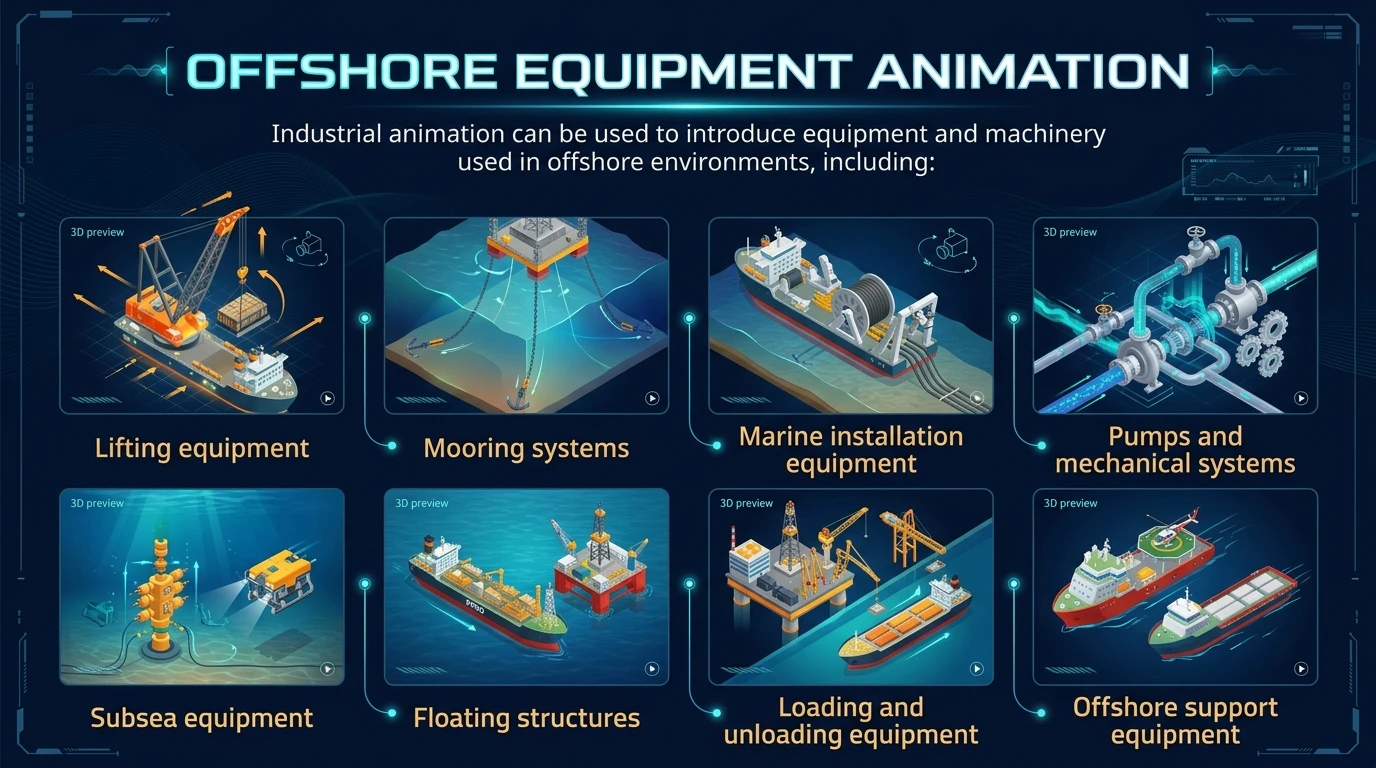
Industrial animation can be used to introduce equipment and machinery used in offshore environments, including lifting equipment, mooring systems, marine installation equipment, pumps and mechanical systems, subsea equipment, floating structures, loading and unloading equipment, and offshore support equipment.
Installation and Commissioning Animation
The sequence of operations is critical in offshore projects. Fidar can visualize the complete installation process, from equipment transportation and barge preparation to final installation and commissioning.
Floating Structure Animation
Floating structures, artificial islands, floating solar units and other marine systems can be presented through realistic 3D animation. This type of video can demonstrate how the structure is transported, positioned, connected, stabilized and operated in a marine environment.
Mooring System Animation
Mooring systems can be difficult to explain through static drawings. A 3D animation can show the position of mooring lines, connection points, movement of the floating structure, the relationship between the structure and the seabed, the effect of environmental forces, and how the system controls the movement of the structure.
Offshore Wind Animation
Offshore wind projects often involve multiple vessels, foundations, cables and installation stages. Industrial animation can be used to demonstrate turbine installation, foundation installation, floating wind platforms, subsea cable installation, support vessel operations, mooring systems, turbine transportation and positioning, and offshore construction sequences.
Barge and Lifting Operation Animation
The coordination between a barge, crane, support vessel and heavy equipment is an important part of many offshore projects. An industrial animation can show the movement of each component and explain the order in which the operation must be performed.
Offshore Projects Displayed on the Fidar Website
Fidar presents several marine and offshore projects on its website. These examples demonstrate experience with different types of offshore equipment and systems.
| Client | Project | Year and Country |
|---|---|---|
| Harlum Services | Offshore Floating Island | 2024, England |
| Conbit | Lifting Equipment | 2024, the Netherlands |
| Wuprohyd | Offshore Floating Island | 2024, Poland |
| Salinex | Floating Solar Unit | 2024, Singapore |
| Remazel | Mooring System | 2024, Italy |
The website also features examples and 3D concepts related to wave power buoys, load-reduction mooring systems, barge operations, floating offshore wind, rock bags, and marine and offshore equipment.
These subjects represent the type of technical and industrial content that can be explained through professional offshore animation.
What Should a Professional Offshore Animation Include?
A successful industrial animation requires more than an attractive 3D model. It must be technically useful, visually clear and aligned with the purpose of the project.
Fidar’s Industrial Animation Production Process
A professional offshore video usually passes through several stages before final delivery.
Understand the project objective
The first step is to determine why the animation is being produced: a client presentation, a tender submission, marketing and sales, a product introduction, safety training, an installation explanation, investor communication, or a demonstration of engineering capability. The objective influences visual style, level of detail, duration and narration.
Collect technical information
Useful inputs include CAD files or existing 3D models, engineering drawings, diagrams, equipment catalogues, photographs, technical specifications, the sequence of operations, vessel and offshore-environment information, and company logos and brand guidelines. If all project information is not yet available, the scope of modelling and animation can be discussed during the initial consultation.
Script and storyboard
The storyboard defines what the audience will see, in what order and from which camera angle. This stage helps the production team and the client agree on the visual direction before detailed animation begins, and can reduce unnecessary revisions later.
3D modelling and scene preparation
The required equipment, structures, vessels and offshore environment are modelled or prepared for animation. If the client already has 3D models, they can be reviewed and adapted for use in the final video.
Animation and technical movement
Movement is added for vessels, equipment, loads, cables, mooring lines and other components. The objective is to demonstrate the real operational sequence in a clear and logical way.
Lighting, materials and final editing
Lighting, water, marine environments, metal materials, camera movements, music, narration, subtitles and technical labels are added during the final stages. Fidar states on its website that suitable projects can be delivered in under four weeks. The final timeline depends on the number of assets, the level of modelling, the complexity of the operation and the number of revisions required.
How Much Does Industrial Animation Cost?
The cost of offshore industrial animation cannot be determined with one fixed price because every project has different requirements.
The main factors affecting the cost include the number of equipment and structures, whether a 3D model already exists, the level of modelling detail, the complexity of the operation, the need to simulate water, cables, wind or mechanical movement, the final video duration, the number of narration or subtitle languages, the number of revisions, the required output quality, and the deadline and production schedule.
What to send for a scoped estimate
The subject of the project, the purpose of the video, the approximate required duration, existing drawings, models and technical files, the required delivery date, the target audience, and the required language and output format. With this information, Fidar can define the project scope and recommend a suitable production approach instead of providing a generic estimate.
Why Choose Fidar for Offshore Industrial Animation?
Fidar does not only create general promotional videos. The company focuses on transforming technical and industrial concepts into visual content that can be used for communication, marketing, presentation and training.
Turn the Offshore Method into a Video the Audience Can Follow
Share CAD files, technical drawings, product images, operation sequences, brand guidelines and reference videos. Fidar develops the storyboard, prepares the 3D models, animates the equipment and adds camera movements, technical labels, voice-over or subtitles when required.
View Industrial AnimationA Complex Offshore Idea Still Needs a Clear Visual Sequence
This approach is especially useful for projects involving floating structures, mooring systems, lifting equipment, barges, offshore wind, subsea operations and marine technology. Instead of asking the audience to interpret complex drawings, the video can show how the system works, how the operation is performed and why the solution matters.
The final video can be used for tender presentations, investor meetings, sales campaigns, exhibitions, websites and safety training. Fidar’s website showcases offshore projects such as Offshore Floating Island, Floating Solar Unit, Lifting Equipment and Mooring System, with customers in 15 countries.
For projects with a clearly defined scope, delivery may be completed in under four weeks, depending on the project’s complexity, available technical files and revision requirements.
If you need an industrial animation that explains your offshore project clearly and professionally, contact Fidar Animation. Share your concept and available technical files to receive a customized production plan and quotation. Review Fidar’s industrial animation service before committing internal time to a tender, investor or training presentation that still depends on drawings alone.