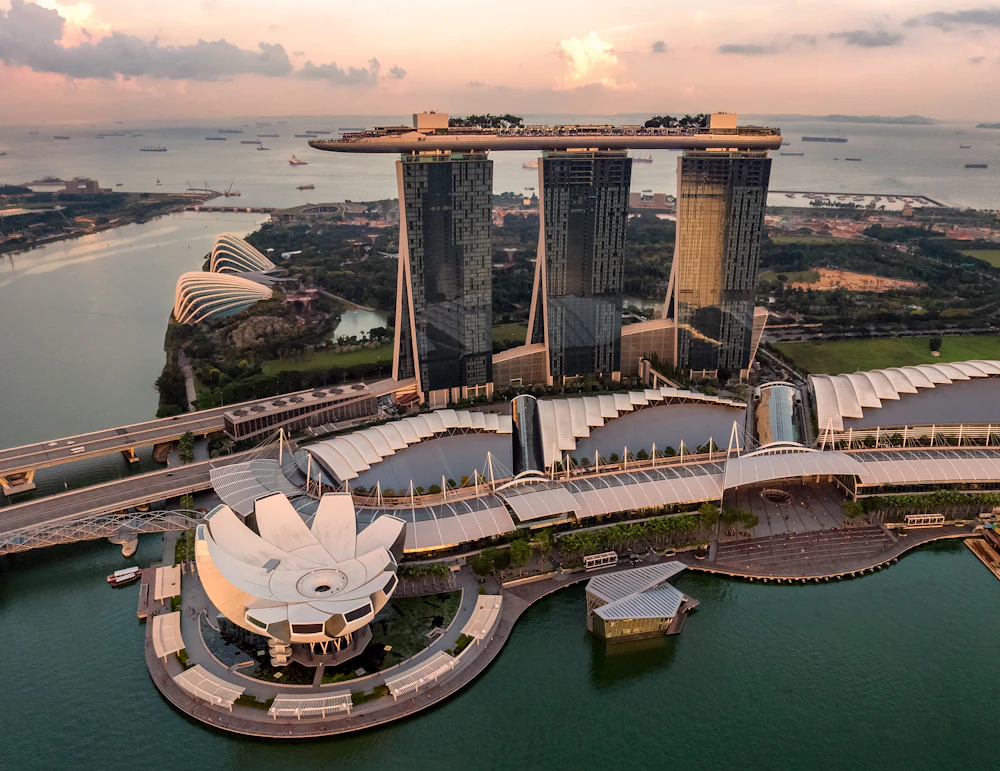
Singapore
Singapore operates within a common-law commercial system and has extensive experience with independent bank undertakings used in trade and corporate transactions.
AI Lender Match helps business owners, investors, and sponsors identify lenders that fit their deal profile without wasting weeks on cold outreach. Get a smarter starting point for acquisitions, commercial real estate, trade finance, and structured debt transactions.
A standby letter of credit can support a payment, performance or contractual obligation whether the parties operate in the same country or across several jurisdictions. The core banking function remains similar. The issuing bank provides an independent undertaking in favor of a beneficiary and agrees to honor a complying presentation under the terms of the instrument.
The surrounding legal and banking framework can change significantly according to location. Domestic standby letters of credit in the United States operate within a relatively developed statutory framework under UCC Article 5. European transactions depend more heavily on national law and established guarantee practice, while Asian markets require jurisdiction-specific analysis across several distinct legal systems.
International SBLCs add another layer. Governing law, issuer acceptance, correspondent banking, confirmation, sanctions screening and country risk can all become relevant once the applicant, issuing bank and beneficiary operate across borders.

Financely helps companies prepare domestic and international SBLC requirements around the applicant, beneficiary, underlying obligation, issuing bank criteria and applicable banking rules.
Submit an SBLC RequirementA domestic standby letter of credit generally supports an obligation where the applicant, beneficiary and principal commercial relationship are located within the same country. The issuing bank is also commonly located in that jurisdiction, although individual structures can vary.
A U.S. construction company could obtain a performance standby from a U.S. bank in favor of a U.S. project owner. A French business could obtain an independent bank undertaking for a French landlord. A Singapore company could use a standby to support an obligation owed to another Singapore company.
These transactions share the same basic commercial purpose while operating within different legal environments. The governing law, customary instrument type and banking practices therefore deserve the same attention as the face amount and expiry date.
The United States has a comparatively well-developed statutory framework for letters of credit. Article 5 of the Uniform Commercial Code addresses letters of credit and establishes important principles governing the relationship between issuers, applicants and beneficiaries.
UCC Article 5 recognizes the independence of the issuer's undertaking from the underlying commercial contract. The issuing bank examines the beneficiary's presentation according to the terms of the standby rather than determining who ultimately prevailed in the underlying commercial dispute.
U.S. standby letters can also expressly incorporate the International Standby Practices, commonly known as ISP98. The applicable statutory framework and incorporated banking rules can therefore operate together.
UCC Section 5-108 addresses the issuer's examination of documents and the requirement to honor a presentation that appears on its face to comply with the letter of credit. This gives the drafting of the SBLC considerable importance because the beneficiary's ability to draw depends on satisfying the documentary requirements contained in the instrument.
A domestic U.S. beneficiary should therefore review the required demand language, supporting statements and presentation location before accepting the standby. Ambiguous wording can create avoidable problems when the instrument is eventually used.
U.S. banking rules also recognize the credit exposure created by standby issuance. Federal Reserve Regulation H provides that standby letters of credit generally count toward applicable lending limits for state member banks. Cash coverage equal to the bank's maximum liability can change the regulatory treatment under the relevant rule.
This explains why a standby application can resemble a conventional credit application. Banks may review cash flow, leverage, collateral and reimbursement capacity before approving issuance. Depending on the applicant's credit quality, an SBLC may be supported by cash or by an approved credit facility and collateral package.
The European Union requires a different analysis because there is no single EU equivalent to UCC Article 5 that governs every domestic standby transaction across all member states. The legal framework surrounding an independent bank undertaking depends heavily on the law of the relevant country.
A French standby or independent guarantee can therefore be analyzed differently from an instrument issued under German, Italian or Dutch law. Banks and corporate users frequently rely on internationally recognized ICC rules to create greater contractual consistency.
ISP98 can govern an SBLC where it is expressly incorporated. European banks also make extensive use of independent demand guarantees, often subject to URDG 758. In practical terms, a European beneficiary may request a demand guarantee for a commercial obligation that a U.S. beneficiary might support through a standby letter of credit.
European banking practice has a strong tradition of independent demand guarantees. URDG 758 provides standardized rules for demand guarantees and counter-guarantees used across construction, infrastructure, trade and other commercial transactions.
These guarantees can perform an economic function similar to that of an SBLC. The bank gives the beneficiary an independent undertaking and agrees to pay against the documents or demand specified by the instrument.
French law expressly recognizes the autonomous guarantee through Article 2321 of the French Civil Code. The guarantor undertakes to pay according to the agreed demand conditions, while the independent nature of the guarantee separates the undertaking from many defenses arising under the underlying contract.
Other EU countries approach independent guarantees through their own statutes, commercial law principles and case law. The exact jurisdiction should therefore be reviewed whenever a European standby or demand guarantee is being structured.
The term domestic EU SBLC can be misleading because the European Union contains several national legal systems. A French bank issuing an undertaking for a French applicant in favor of a French beneficiary presents a genuinely domestic structure.
The position changes when a French applicant obtains an SBLC from a French bank for a beneficiary in Germany. Both parties operate within the European Union, yet the transaction contains a cross-border element and may require consideration of governing law, presentation mechanics and beneficiary acceptance.
The EU single market facilitates commercial activity between member states. It does not create a single domestic letter-of-credit jurisdiction for every independent bank undertaking.
Asia requires an even more jurisdiction-specific approach. Singapore, Hong Kong, mainland China, Japan and other major markets operate under different legal systems and banking regulations. There is no single Asian law governing standby letters of credit.
Leading Asian financial centers nevertheless have extensive experience with documentary credit, standby instruments and demand guarantees. ISP98, UCP 600 and URDG 758 can provide standardized contractual rules depending on the product and transaction.
Singapore operates within a common-law commercial system and has extensive experience with independent bank undertakings used in trade and corporate transactions.

Hong Kong combines common-law principles with a major international trade finance market and widespread use of ICC banking rules.

China has developed judicial rules dealing specifically with independent guarantees and distinguishes domestic from foreign-related guarantee arrangements.
Singapore courts recognize the documentary character of independent banking instruments. The terms of the standby and the documents presented under it therefore play a central role when determining whether a demand satisfies the instrument.
A domestic Singapore SBLC can operate as a conventional independent credit instrument. The drafting, incorporated ICC rules and underlying bank documentation should still be aligned before issuance.
Mainland China provides a different legal example. The Supreme People's Court has issued provisions governing independent guarantee disputes. These provisions recognize written undertakings issued by banks or qualifying financial institutions against demands and conforming documents.
Chinese judicial rules also address independent guarantees used for domestic transactions. They separately deal with foreign-related structures and questions concerning applicable law.
A Singapore standby and a Chinese independent guarantee may serve similar commercial purposes while operating within different legal systems. The issuing bank's jurisdiction, beneficiary location and governing rules should therefore be identified before the applicant approaches an issuing institution.
| Feature | United States | European Union | Asia |
|---|---|---|---|
| Legal Framework | UCC Article 5 plus applicable state and federal banking rules. | National member-state laws alongside EU prudential regulation. | Country-specific commercial law, banking regulation and judicial precedent. |
| Common Rules | ISP98 is widely suitable for standby instruments. | ISP98 may govern SBLCs while URDG 758 is widely used for demand guarantees. | ISP98, UCP 600 or URDG 758 may apply depending on the jurisdiction and instrument. |
| Common Product Form | Standby letters of credit are well established. | SBLCs coexist with independent demand guarantees. | Product conventions vary significantly by financial center. |
| Legal Uniformity | Relatively high through widespread adoption of UCC Article 5. | Lower because national law differs across member states. | Lower because legal systems differ across the region. |
| Typical Credit Treatment | Contingent bank credit exposure subject to underwriting. | Contingent exposure subject to bank credit and prudential requirements. | Contingent exposure governed by local banking and capital rules. |
| Cross-Border Complexity | Usually limited in a genuinely domestic transaction. | Can arise between two EU member states. | Can arise quickly between neighboring Asian markets. |
An international SBLC contains a meaningful cross-border element. The applicant and beneficiary may be located in different countries, while the issuing bank can operate from another jurisdiction. The underlying commercial contract may also be governed by a separate legal system.
The instrument continues to operate as an independent documentary undertaking. International transactions simply add more variables around law, issuer acceptability, compliance and payment.
ISP98 is especially useful in this environment because the rules were designed around international standby practice. The same rules can also be incorporated into domestic standbys, which means ISP98 should be understood as a standardized standby framework rather than a rulebook reserved exclusively for cross-border transactions.
| Issue | Domestic SBLC | International SBLC |
|---|---|---|
| Jurisdictions | Usually concentrated within one country. | Two or more jurisdictions can affect the transaction. |
| Governing Law | Often relatively straightforward to identify. | Requires greater attention to choice of law and dispute forum. |
| Issuer Acceptance | Beneficiary may already know the domestic issuing bank. | Beneficiary may impose rating, jurisdiction or bank-acceptance requirements. |
| Advising Bank | May be unnecessary depending on delivery method. | Frequently useful for authentication and communication to the beneficiary. |
| Confirmation | Less commonly required where the issuer is already acceptable. | May be requested to mitigate issuer or country risk. |
| Country Risk | Usually concentrated within the domestic jurisdiction. | Can include sovereign, transfer and political risk. |
| Sanctions and Compliance | Generally involves fewer jurisdictions. | Can require screening across several countries and counterparties. |
| Currency | Frequently denominated in the domestic commercial currency. | Can involve foreign currency and transfer considerations. |
Cross-border transactions can involve several potential legal systems. A Swiss bank might issue an SBLC for a UAE applicant in favor of a Singapore beneficiary, while the underlying commercial contract is governed by English law.
The parties should therefore establish which law governs the standby itself and which forum has jurisdiction over disputes. These questions deserve attention before the instrument is issued because later uncertainty can undermine the commercial value of the security.
Incorporated ICC rules can provide standardized documentary procedures. They operate alongside applicable law rather than eliminating the need to identify it.
A domestic beneficiary may already maintain relationships with the proposed issuer or understand its standing within the local banking market. An international beneficiary can face a different credit decision when the issuing institution operates in another country.
The beneficiary may review the issuer's credit quality, jurisdiction and regulatory environment. Country exposure and transfer restrictions can also influence acceptance. Some commercial contracts therefore specify acceptable issuing banks or minimum credit ratings before the standby is issued.
A technically valid SBLC can still fail to satisfy the commercial requirement when the issuing institution falls outside the beneficiary's acceptance criteria.
International standbys frequently pass through an advising bank. The advising institution can authenticate the message and communicate the standby to the beneficiary through an established banking channel.
Advising does not automatically mean that the advising bank assumes the issuing bank's payment obligation. Its role should therefore be distinguished carefully from confirmation.
A beneficiary can request confirmation when additional bank credit support is required. A confirming bank adds its own undertaking according to the confirmation terms and assumes exposure to the issuing institution.
Confirmation can become relevant where the beneficiary has concerns about the issuing bank, country exposure or transfer risk. The confirming bank will assess these risks before deciding whether to add its undertaking and how to price the transaction.
Some international transactions use an indirect structure where the applicant's bank issues a counter-guarantee to another bank located in the beneficiary's jurisdiction. The second institution then issues the operative guarantee in favor of the beneficiary.
This approach can be useful when the commercial contract requires a locally issued guarantee. URDG 758 contains specific provisions covering both demand guarantees and counter-guarantees, which makes it particularly relevant to these structures.
International SBLC transactions can expose banks to several compliance regimes. The issuing institution needs to understand the applicant, beneficiary and underlying commercial purpose. Correspondent institutions may conduct their own screening.
Sanctions, export controls and restricted jurisdictions can influence whether an instrument can be issued or honored. Banks can also consider country risk and foreign exchange controls where repayment or drawing proceeds must cross borders.
The commercial transaction should therefore be fully documented before the applicant approaches an issuing bank.
The applicant requests the standby and enters into the reimbursement arrangement with the issuing bank. The applicant is responsible for satisfying the issuer's credit and compliance requirements.
The issuing bank underwrites the applicant and issues the independent undertaking. Once issued, the bank must administer the standby according to its terms and applicable rules.
The beneficiary receives the benefit of the standby and may make a presentation when the conditions contained in the instrument are satisfied.
The advising bank can authenticate the standby and communicate it to the beneficiary. Its role does not automatically include an independent payment obligation.
A confirming bank may add its own undertaking when the beneficiary requires additional protection against issuer or country risk.
An adviser can help structure the transaction, prepare the applicant's file and identify institutions whose credit criteria and issuance capabilities match the requirement.
Domestic SBLCs usually involve fewer operational variables because the applicant, beneficiary and issuing institution operate within one principal legal and banking environment. This can simplify governing law, communications and issuer acceptance.
International SBLCs require greater coordination because the beneficiary may impose specific bank requirements while several jurisdictions influence the transaction. Advising, confirmation and counter-guarantees can also introduce additional institutions.
The additional complexity does not make international issuance inherently unsuitable. It means that the structure needs to be defined more carefully before the instrument is requested.
A well-prepared applicant should establish the beneficiary's exact requirements before approaching an issuing bank. This reduces the risk of obtaining an instrument that later needs substantial amendments.
Financely works with companies seeking financial and performance standby letters of credit for legitimate commercial obligations. Our work can begin with reviewing the applicant, beneficiary, required wording and purpose of the instrument.
We can also assist with preparing the applicant's credit package and identifying banks or financial institutions whose criteria fit the proposed transaction. International cases may require additional coordination around issuing jurisdiction, advising banks or confirmation.
Applicants can review our standby letter of credit services or submit a financing requirement through our financing request form.
Submit the applicant details, beneficiary requirements, proposed amount, underlying obligation and available collateral or credit support for an initial transaction review.
Request an SBLC ReviewA domestic standby letter of credit generally supports an obligation where the principal parties and commercial relationship are located within the same country. The instrument remains an independent undertaking issued by a bank in favor of a beneficiary.
An international SBLC contains a cross-border element such as an applicant, beneficiary or issuing bank located in different countries. Cross-border structures can introduce additional legal, compliance and bank-acceptance considerations.
UCC Article 5 provides an important statutory framework for letters of credit in the United States. A standby can also expressly incorporate rules such as ISP98, subject to applicable law.
EU member states retain their own legal systems for independent guarantees and related undertakings. European transactions can therefore depend on national law alongside applicable EU banking regulation and incorporated ICC rules.
Asian jurisdictions have different commercial laws and banking regulations. Singapore, Hong Kong and mainland China provide examples of distinct legal systems, so transactions should be reviewed according to the issuing jurisdiction.
Yes. ISP98 can be expressly incorporated into a standby used for domestic or international transactions. The incorporated rules operate alongside applicable law.
Confirmation may be requested when the beneficiary wants an additional bank undertaking because of issuing bank credit, country exposure or other commercial requirements. Availability remains subject to the confirming bank's approval.
Advising generally involves authentication and communication of the instrument. An advising bank does not automatically assume the same independent payment obligation as the issuer or a confirming bank.
Financely provides advisory, transaction preparation and bank introduction services. Final issuance remains subject to the relevant bank's credit underwriting, compliance procedures, documentation and approval.
Article 5 of the Uniform Commercial Code provides the principal statutory framework for letters of credit in the United States.
https://www.law.cornell.edu/ucc/5ISP98 provides internationally recognized rules specifically designed for standby letters of credit and can be incorporated into domestic or international standbys.
https://library.iccwbo.org/content/tfb/RULES/tfb-isp98-rules.htm?l3=RulesURDG 758 provides ICC rules for independent demand guarantees and counter-guarantees commonly used in international commercial transactions.
https://2go.iccwbo.org/uniform-rules-for-demand-guarantees-urdg-2010-revision-english.htmlFederal Reserve rules address standby letters of credit as contingent credit exposures for state member banks and establish relevant lending-limit treatment.
https://www.federalreserve.gov/frrs/regulations/section-20824-letters-of-credit-and-acceptances.htmArticle 2321 recognizes the autonomous guarantee under French law and provides an example of the national-law approach used within the European Union.
https://www.legifrance.gouv.fr/loda/article_lc/LEGIARTI000006448430/The Supreme People's Court provisions address independent guarantee disputes in mainland China and include rules covering domestic and foreign-related guarantees.
https://english.court.gov.cn/2021-10/20/c_766912.htmFinancely acts as an independent financial advisor and arranger. We are not a bank or direct lender and do not guarantee SBLC issuance. All standby letter of credit transactions remain subject to issuing bank underwriting, KYC, AML and sanctions review, applicable law, documentation and final approval. Financely does not accept client deposits or collateral.
Independent Capital Advisory
Financely is an independent capital adviser focused on trade finance, project finance, commercial real estate and M&A funding. We structure, underwrite and place transactions through regulated partners across banks, funds and insurers.
Our work is transaction-specific. We assess the underlying financing requirement, commercial structure, repayment mechanics, collateral, documentation and counterparty risks before preparing opportunities for lender or investor review.
In trade and commodity finance, this includes analysis of the underlying trade, payment mechanics, market evidence, collateral controls and compliance risks. Engagements are undertaken on a best-efforts basis and do not constitute a commitment to lend or invest. All transactions remain subject to KYC, AML, due diligence, credit approval and counterparty requirements.

Trade Finance Expertise
Financely combines experience across documentary credits, structured trade finance, commodity finance, structured credit and working-capital facilities with transaction structuring, underwriting preparation and capital placement capabilities.
Our trade finance capabilities cover import, export, pre-shipment, post-shipment and commodity-backed financing structures across Europe, Africa, the Middle East, South Asia and Southeast Asia. We assess the commercial transaction alongside the proposed financing structure, including payment mechanics, counterparties, collateral, repayment sources and transaction controls.
Financely supports importers, exporters, commodity traders, manufacturers and other operating companies with structuring, underwriting preparation and placement of financing opportunities with banks, private credit funds, specialty lenders, insurers and other institutional capital providers.
Our work may include documentary credit structures, supplier financing, receivables facilities, inventory financing, borrowing-base facilities, pre-export finance and other structured working-capital solutions. Each mandate is developed around the underlying trade flow, credit profile and requirements of prospective financing providers.
Financely's trade finance capabilities include postgraduate finance qualifications and professional experience across banking, structured credit, documentary trade finance, working-capital finance and cross-border commodity transactions. Sector exposure includes energy, metals, agricultural commodities, industrial products and general import-export trade.
Advisory Services
Select the financing category relevant to your transaction. Each mandate is assessed based on transaction structure, capital requirement, execution readiness and lender suitability.
Structuring and placement for importers, exporters, commodity traders and companies executing cross-border transactions. Mandates may involve documentary credits, commodity-backed facilities, receivables, inventory and structured working capital.

Debt and capital advisory for renewable energy, infrastructure, industrial and other capital-intensive projects. Financely supports sponsors with financing structure, lender preparation and capital placement.

Capital advisory for commercial property acquisitions, developments, bridge transactions, construction projects and refinancing requirements.

Capital structuring for acquisitions, buyouts, sponsor-backed transactions and strategic corporate purchases. Mandates may combine senior debt, private credit, bridge capital and mezzanine financing.

Bespoke debt structures for companies and sponsors requiring institutional capital outside conventional bank lending parameters.


Financely provides paid structured debt advisory, trade finance, project finance and credit enhancement advisory for companies, sponsors and investors executing qualified transactions.

Financely advises post-revenue businesses on accessing capital by presenting opportunities to professional investors, coordinating when needed with regulated broker-dealers, investment banks, and legal counsel. We are not a broker-dealer, do not solicit or accept securities orders, serve only B2B clients, and make no assurance of capital-raising outcomes.
Our services are generally intended for companies with at least USD 1 million in annual revenue and sufficient resources to retain professional advisors.
Mandate fees start at USD 10,000 and cover advisory, structuring, transaction preparation, due diligence coordination, and execution support.
For trade finance, project finance, commercial real estate, or business acquisition mandates, submit a request for quote with a concise deal summary and supporting documents. Our team will review and provide a tailored proposal within 1 to 3 business days.