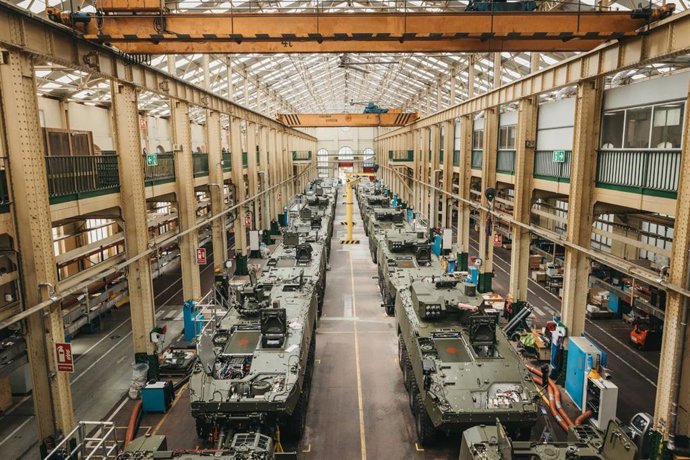
Pre-Delivery Funding
Mobilization, purchase-order and pre-shipment facilities can provide capital before the contractor generates an invoice.
AI Lender Match helps business owners, investors, and sponsors identify lenders that fit their deal profile without wasting weeks on cold outreach. Get a smarter starting point for acquisitions, commercial real estate, trade finance, and structured debt transactions.
Europe's defense procurement cycle is creating a parallel financing requirement across manufacturers, subcontractors, technology companies and specialist suppliers. Winning a government or prime-contractor award can create a substantial working capital requirement months before the supplier receives the corresponding contract revenue.
EU defense expenditure reached €418 billion in 2025 according to the European Defence Agency, while defense equipment procurement reached approximately €115 billion. Suppliers participating in this expansion need capital for components, inventory, employees, manufacturing capacity and production costs before many milestone payments become available.
Trade finance, defense contract funding, receivables finance and structured working capital can finance different stages of this cycle. The same financing requirement can apply to U.S. companies supplying European governments or European defense primes.

Financely works with European and U.S. companies seeking trade finance, working capital and structured financing around awarded defense and security contracts.
Submit a Financing RequirementDefense contract financing provides working capital against an identifiable defense-related commercial contract, purchase order, receivable or supply agreement. The financing structure is developed around the cash conversion cycle created by the contract and the borrower's ability to complete delivery.
Consider a European electronics manufacturer that receives a €30 million contract from a major defense prime. The supplier may require €8 million during the first six months to purchase components and increase production capacity, while contractual payments may arrive after manufacturing milestones, inspection or final delivery.
The resulting timing gap creates a clear financing requirement. A lender can evaluate the contractor alongside the underlying contract, payment terms, customer quality, production schedule and execution risk.
Defense procurement frequently involves long production periods and substantial upfront costs. Suppliers can commit significant resources well before invoices become payable, particularly when contracts require specialized manufacturing or long-lead components.
A financially attractive contract can therefore create a material liquidity constraint during execution. Larger orders can intensify the requirement because more capital must be deployed across procurement, manufacturing and delivery before collection.
This dynamic is especially important for SMEs deeper within the European defense supply chain. Thousands of smaller engineering, manufacturing and technology companies supply major European defense groups and can experience rapid balance-sheet growth when procurement volumes increase.
Trade finance can support several stages of contract execution. The appropriate facility depends on when capital is required, the strength of the contractual counterparty and which assets or payment obligations exist at that point in the cycle.
Mobilization, purchase-order and pre-shipment facilities can provide capital before the contractor generates an invoice.

Facilities can support suppliers and subcontractors delivering components to larger defense primes.
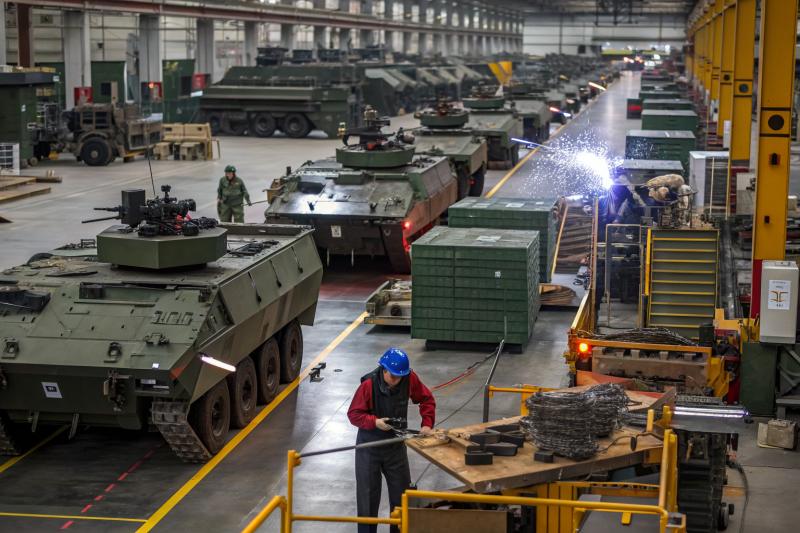
Accepted invoices from governments or established prime contractors can create a defined short-term repayment source.
Mobilization financing provides capital shortly after a contract has been awarded. Funds can cover early production expenses, supplier deposits, labor and other costs required to begin contract execution.
The lender will generally review contract value, expected gross margin, production schedules and milestone payments before determining the amount of capital available. Cost-to-complete analysis can become especially important where production extends across several months.
Purchase order financing can support procurement required to satisfy an existing customer order. The structure can be particularly useful for distributors and suppliers purchasing finished equipment or components from third parties before delivering them to the defense customer.
The lender will generally evaluate the customer purchase order alongside the supplier relationship and delivery mechanics. Customer quality and expected payment terms can substantially influence the credit decision.
Pre-shipment financing provides working capital before delivery. Eligible uses can include manufacturing expenses, inventory and other costs directly associated with fulfilling the contract.
Execution controls become especially important because capital is advanced before the corresponding receivable exists. Contractors with demonstrated production capacity and established delivery histories can present stronger financing cases.
Once goods have been delivered and an invoice has been accepted, the lender can evaluate a defined payment obligation. A €10 million approved receivable due in 90 days could potentially support a short-term facility sized against an agreed percentage of the invoice.
Assignment rights, set-off provisions, acceptance requirements and payment mechanics need to be reviewed before the lender determines an advance rate. The quality of the government authority or defense prime can materially influence the financing terms.
Large defense contracts frequently contain several payment milestones. Financing can bridge the period between successful completion of a contractual stage and receipt of the corresponding payment.
A revolving facility can also advance capital against qualifying milestones across multiple contracts. This can provide an established defense supplier with more predictable liquidity as its order backlog expands.
Companies supplying several customers may require broader working capital facilities. A borrowing base can provide revolving credit based on eligible inventory and receivables.
Borrowing availability is recalculated periodically. Additional qualifying receivables can generate additional capacity subject to advance rates, concentration limits and other lender criteria.
Supply-chain finance can improve liquidity deeper within the contractor ecosystem. A large defense prime may have hundreds of SMEs supplying electronics, components, engineering services and specialist systems under different payment schedules.
Banks and institutional lenders can provide early payment against qualifying invoices. The structure benefits from the credit quality of the larger buyer while giving smaller contractors earlier access to cash.
The European Investment Bank has materially expanded its involvement in Europe's security and defense sector. EIB Group financing for security and defense exceeded €4 billion in 2025 compared with €1.2 billion during 2024.
The EIB has also created financing channels through commercial banks to support SMEs and mid-cap companies in the defense supply chain. These programs can finance eligible investment expenditure and working capital through participating financial institutions.
In 2025, the EIB increased its intermediated financing envelope for defense-industry suppliers from €1 billion to €3 billion. An initial agreement with Deutsche Bank involved €500 million of EIB financing designed to support approximately €1 billion of eligible security and defense investment.
In January 2026, the EIB and Santander announced arrangements expected to generate approximately €400 million of new supply-chain financing for European security and defense companies. These programs demonstrate how institutional funding can increase commercial-bank lending capacity across the defense industrial base.
Weapons and ammunition remain excluded from EIB financing. Other dedicated military and police equipment or infrastructure can qualify subject to applicable EIB criteria, geographic requirements and the specific nature of the financed project.
The EU's Security Action for Europe program provides up to €150 billion of EU loans to Member States for large-scale defense procurement. The financing flows to governments that subsequently award procurement contracts to eligible contractors and industrial suppliers.
A manufacturer winning a SAFE-supported contract can still require separate working capital while producing and delivering the equipment. This creates a financing chain connecting public procurement capital with commercial trade finance.
SAFE can strengthen the commercial foundation of the underlying procurement, while the contractor's own financing remains subject to a separate underwriting process. Banks and private lenders still need to evaluate execution capacity, contract terms and the source of repayment.
SAFE forms part of the EU's broader Readiness 2030 initiative. The European Commission estimates that the plan could mobilize around €800 billion for additional defense expenditure, including €150 billion through SAFE and potentially close to €650 billion of additional national fiscal space over four years.
Larger procurement budgets create a corresponding need for manufacturers to increase production before the full revenue effect of new contracts reaches their balance sheets. The resulting financing requirement can extend throughout the industrial supply chain.
Commercial banks and private credit funds capable of evaluating government procurement can participate in this financing market. Advisers can also help contractors translate awarded contracts into lender-ready financing structures.
A signed government or prime-contractor award provides evidence of future revenue. Credit analysis still needs to establish whether the contractor can execute the contract and convert the award into collectible receivables within the required time frame.
| Area | Typical Lender Review |
|---|---|
| Counterparty | Contracting authority, government entity, prime contractor and overall credit quality. |
| Contract | Contract amount, remaining value, termination provisions, assignment rights and set-off provisions. |
| Execution | Production schedule, delivery requirements, acceptance procedures and historical performance. |
| Economics | Gross margin, cost to complete, cash-flow requirements and existing working capital. |
| Payment | Milestones, invoicing procedures, payment terms and expected collection dates. |
| Security | Receivables, inventory, corporate collateral, controlled accounts and guarantees. |
| Compliance | KYC, sanctions, export licenses, insurance and applicable regulatory requirements. |
A contract from a highly rated European government can improve the quality of the expected receivable. Execution risk remains relevant until contractual delivery and acceptance requirements have been satisfied, so lenders generally examine the complete path from contract award to final collection.
Defense contract funding extends throughout the supply chain. Thousands of companies supply Tier 1 and Tier 2 contractors that ultimately deliver equipment and systems to European ministries of defense.
A component manufacturer supplying Rheinmetall, Leonardo, Thales or another major defense prime therefore presents a different credit profile from a company contracting directly with a government. The lender evaluates the immediate contractual counterparty alongside the borrower's position within the wider supply chain.
An approved receivable from a strong prime contractor can potentially support financing even where the ultimate product is delivered to a government. Advance rates and collateral requirements will depend on the actual contract and lender mandate.
Defense contracts may require bid bonds, performance guarantees or advance payment guarantees. These instruments consume bank credit capacity and should be considered alongside funded working capital requirements.
A contractor receiving an advance payment may need to issue an advance payment guarantee in favor of the government buyer. The issuing bank will underwrite that contingent exposure and determine the collateral or corporate credit support required.
A €50 million contract could therefore require €8 million of working capital and a €5 million performance guarantee simultaneously. The financing strategy should account for both requirements before production begins.
A defense contractor may require working capital for production alongside bank guarantees supporting performance, advance payments or bidding obligations.
Discuss a Defense ContractAmerican defense companies can participate in European procurement through direct commercial contracts, European prime contractors and government-to-government Foreign Military Sales structures. The financing considerations vary according to the procurement channel, buyer and product involved.
EU countries can purchase U.S. defense equipment through open tenders, bilateral arrangements and U.S. Foreign Military Sales channels. The commercial environment is evolving as European initiatives place greater emphasis on local production capacity and supply-chain autonomy.
American suppliers should identify the specific procurement and funding framework supporting each contract before establishing their financing structure. European content requirements, licensing and currency exposure can all affect lender underwriting.
SAFE contains industrial-content requirements that can directly affect American participation. For procurements supported through SAFE, the cost of components originating outside the EU, EEA-EFTA states and Ukraine generally cannot exceed 35% of the estimated component cost of the finished product.
Certain advanced capability categories face additional requirements concerning control over product design, adaptation and evolution. These provisions can influence the eligibility of systems involving substantial third-country intellectual property or technical restrictions.
European manufacturing capacity, local partnerships and qualifying supply chains can therefore become commercially important for U.S. companies participating in SAFE-supported procurement.
SAFE eligibility should be reviewed for the specific procurement. Conventional Member State procurement outside SAFE can operate under different sourcing and eligibility criteria.
A U.S. supplier also needs to determine whether exported products fall under the International Traffic in Arms Regulations or the Export Administration Regulations. The applicable regime can affect contract timing, documentation and the lender's assessment of execution risk.
ITAR governs specified defense articles, technical data and defense services on the U.S. Munitions List. Other military and dual-use products can fall under the EAR administered by the Bureau of Industry and Security.
A lender financing a U.S. export contract will therefore want evidence that the exporter has identified the applicable control regime and can legally complete delivery. Licensing timing can directly affect the financing structure when capital is required before export authorization has been secured.
U.S. exporters frequently use the Export-Import Bank of the United States for export working capital and receivables. Conventional defense transactions require additional analysis because EXIM is generally prohibited by law from financing defense articles and defense services.
Products sold to military organizations or primarily designed for military use are generally treated as defense articles under EXIM policy unless an applicable exception is available. Limited exceptions can apply to qualifying dual-use transactions and other specified categories.
Private banks and specialty lenders can therefore become particularly relevant for conventional military exports. Financing can potentially be structured around corporate credit, contract economics, receivables and eligible collateral subject to lender requirements and export-control compliance.
Commercial banks can provide facilities supported by corporate assets, inventory and qualifying contract receivables.
Specialty lenders can potentially fund procurement and production costs associated with an identifiable European defense contract.
Accepted invoices from European governments or defense primes can create financeable short-term payment obligations.
Cross-border transactions may also require foreign exchange hedging where production costs are denominated in dollars and contract revenue is denominated in euros. Lenders can additionally examine assignment restrictions and payment routes before relying on a European receivable as collateral.
Assume a European manufacturer receives a €40 million contract to supply communication equipment to a defense prime over 18 months. The company expects a gross margin of €9 million and requires €12 million of working capital during peak production.
The contract contains four delivery milestones with payment due 60 days after acceptance of each delivery. A revolving facility can potentially finance production during the period between expenditure and contract collections.
The manufacturer signs a €40 million supply agreement with an established defense prime and develops a detailed production schedule.
A lender could potentially establish a €10 million revolving contract-finance facility after completing underwriting and documentation.
Initial advances support raw materials, specialist components and other eligible production costs required to reach the first delivery milestone.
Approved invoices can become additional collateral after successful delivery and acceptance by the defense prime.
The lender may require customer payments to flow through controlled collection accounts and can receive regular reporting on contract performance.
The facility is repaid as the defense prime pays each accepted milestone and the borrowing base subsequently revolves into later deliveries.
This type of structure can allow a contractor to execute a major award while preserving cash for the rest of its operations. The exact advance mechanics, collateral and controls depend on the lender's underwriting.
A lender evaluating defense contract financing typically requires corporate information and transaction-level documentation. A developed financing package should clearly establish the source of repayment and the capital required to complete the contract.
Companies seeking a multi-contract facility may also need to provide a contract backlog showing awarded contracts, remaining revenue, expected margins and delivery schedules. Strong transaction-level reporting can help lenders understand how the facility will revolve as contracts move through production and collection.
The expansion of European defense expenditure creates financing demand well beyond major defense manufacturers. Engineering companies, electronics manufacturers, logistics providers, software companies and specialist component suppliers can all experience substantial working capital growth.
Public financing programs support part of this ecosystem through commercial financial intermediaries. Private credit can address additional transactions based on its own investment criteria and underwriting requirements.
The result is a broader financing market for lenders capable of evaluating defense contracts, government receivables and specialist manufacturing risk. Suppliers with contracted demand can use these facilities to translate growing order books into actual production capacity.
Financely can work with European and U.S. companies seeking financing around awarded defense and security contracts. The financing case begins with the contract, the customer and the amount of capital required to complete delivery.
We assess the payment schedule and production cycle alongside the borrower's financial position. The review can also cover receivables, inventory, collateral, export requirements and guarantee needs.
Potential structures can include trade finance, contract mobilization facilities, receivables financing, inventory-backed lending and other forms of structured working capital.
Cross-border transactions require additional analysis. U.S. exporters delivering into the European defense market may need to address export controls, procurement eligibility and foreign exchange exposure before presenting the contract to a lender.
Financely's role can include transaction preparation, financing structure development and lender identification. Companies with an awarded contract can submit their requirements through our financing request form.
Submit the contract amount, contracting authority or prime contractor, working capital requirement, payment schedule, delivery timeline and available collateral for an initial review.
Request Defense Contract FinancingDefense contract financing provides working capital around an awarded defense-related contract, purchase order, receivable or supply agreement. The facility is structured according to the contractor's execution cycle and expected repayment source.
Potentially. Lenders evaluate the government counterparty, contract terms, payment schedule, contractor's financial condition and ability to complete delivery before approving financing.
Yes. Financing can potentially support companies supplying established defense primes even where the borrower has no direct contract with the ultimate government customer.
Pre-shipment, mobilization and contract-finance facilities can potentially cover eligible production costs such as components, inventory, labor and subcontractor expenses.
Receivables from governments or established defense primes can potentially support financing after delivery and acceptance. Assignment rights, set-off provisions and payment mechanics remain important to underwriting.
Yes. Commercial banks and private lenders can potentially finance qualifying contracts. The structure must account for procurement eligibility, applicable U.S. export controls and the lender's credit criteria.
SAFE provides EU lending to participating Member States for eligible defense procurement. Contractors receiving orders generated by that procurement may still require separate commercial working capital facilities.
Financely provides advisory, transaction preparation and lender introduction services. Final financing remains subject to the selected lender's underwriting, compliance procedures, documentation and credit approval.
European defense expenditure and procurement statistics.
European Defence Agency Defense DataEIB security and defense financing programs for European companies and financial intermediaries.
EIB Security and DefenceOfficial information on the Security Action for Europe procurement financing framework.
European Commission SAFEU.S. export-control information covering items regulated under the Export Administration Regulations.
Bureau of Industry and SecurityOfficial policies and eligibility information for U.S. export financing programs.
U.S. EXIMFinancely acts as an independent financial advisor and arranger. We are not a bank or direct lender and do not guarantee financing. All transactions remain subject to lender underwriting, KYC, AML, sanctions review, applicable export controls, documentation and final approval. Financely does not accept client deposits or collateral.
Independent Capital Advisory
Financely is an independent capital adviser focused on trade finance, project finance, commercial real estate and M&A funding. We structure, underwrite and place transactions through regulated partners across banks, funds and insurers.
Our work is transaction-specific. We assess the underlying financing requirement, commercial structure, repayment mechanics, collateral, documentation and counterparty risks before preparing opportunities for lender or investor review.
In trade and commodity finance, this includes analysis of the underlying trade, payment mechanics, market evidence, collateral controls and compliance risks. Engagements are undertaken on a best-efforts basis and do not constitute a commitment to lend or invest. All transactions remain subject to KYC, AML, due diligence, credit approval and counterparty requirements.

Trade Finance Expertise
Financely combines experience across documentary credits, structured trade finance, commodity finance, structured credit and working-capital facilities with transaction structuring, underwriting preparation and capital placement capabilities.
Our trade finance capabilities cover import, export, pre-shipment, post-shipment and commodity-backed financing structures across Europe, Africa, the Middle East, South Asia and Southeast Asia. We assess the commercial transaction alongside the proposed financing structure, including payment mechanics, counterparties, collateral, repayment sources and transaction controls.
Financely supports importers, exporters, commodity traders, manufacturers and other operating companies with structuring, underwriting preparation and placement of financing opportunities with banks, private credit funds, specialty lenders, insurers and other institutional capital providers.
Our work may include documentary credit structures, supplier financing, receivables facilities, inventory financing, borrowing-base facilities, pre-export finance and other structured working-capital solutions. Each mandate is developed around the underlying trade flow, credit profile and requirements of prospective financing providers.
Financely's trade finance capabilities include postgraduate finance qualifications and professional experience across banking, structured credit, documentary trade finance, working-capital finance and cross-border commodity transactions. Sector exposure includes energy, metals, agricultural commodities, industrial products and general import-export trade.
Advisory Services
Select the financing category relevant to your transaction. Each mandate is assessed based on transaction structure, capital requirement, execution readiness and lender suitability.
Structuring and placement for importers, exporters, commodity traders and companies executing cross-border transactions. Mandates may involve documentary credits, commodity-backed facilities, receivables, inventory and structured working capital.

Debt and capital advisory for renewable energy, infrastructure, industrial and other capital-intensive projects. Financely supports sponsors with financing structure, lender preparation and capital placement.

Capital advisory for commercial property acquisitions, developments, bridge transactions, construction projects and refinancing requirements.

Capital structuring for acquisitions, buyouts, sponsor-backed transactions and strategic corporate purchases. Mandates may combine senior debt, private credit, bridge capital and mezzanine financing.

Bespoke debt structures for companies and sponsors requiring institutional capital outside conventional bank lending parameters.


Financely provides paid structured debt advisory, trade finance, project finance and credit enhancement advisory for companies, sponsors and investors executing qualified transactions.

Financely advises post-revenue businesses on accessing capital by presenting opportunities to professional investors, coordinating when needed with regulated broker-dealers, investment banks, and legal counsel. We are not a broker-dealer, do not solicit or accept securities orders, serve only B2B clients, and make no assurance of capital-raising outcomes.
Our services are generally intended for companies with at least USD 1 million in annual revenue and sufficient resources to retain professional advisors.
Mandate fees start at USD 10,000 and cover advisory, structuring, transaction preparation, due diligence coordination, and execution support.
For trade finance, project finance, commercial real estate, or business acquisition mandates, submit a request for quote with a concise deal summary and supporting documents. Our team will review and provide a tailored proposal within 1 to 3 business days.